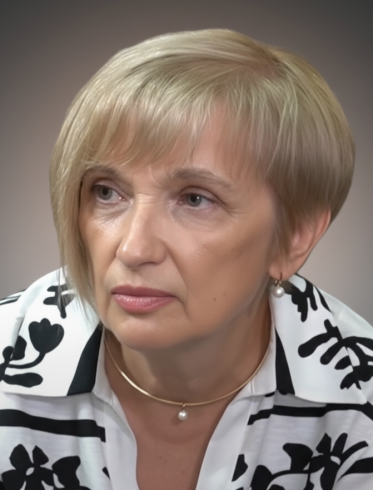
Novel multicomponent biomedical materials to overcome bacterial resistance
Transcript of scientific report at the meeting of the Presidium of NAS of Ukraine, March 11, 2026
Abstract
The report presents the current results of fundamental and applied research conducted at the Institute of Functional Materials Chemistry of the State Scientific Institution "Institute for Single Crystals" of the National Academy of Sciences of Ukraine. The research is aimed at creating novel molecular materials intended for the development of new soft drugs in the form of ointments for the treatment of multidrug-resistant wound infections.
Cite this article:
Lipson V.V. Novel multicomponent biomedical materials to overcome bacterial resistance (transcript of scientific report at the meeting of the Presidium of NAS of Ukraine, March 11, 2026). Visn. Nac. Akad. Nauk Ukr. 2026. (6): 24—30. https://doi.org/10.15407/visn2026.06.024
References
Murray C.J. et al. Global burden of bacterial antimicrobial resistance in 2019: a systematic analysis. Lancet. 2022. 399(10325): 629—655. https://doi.org/10.1016/S0140-6736(21)02724-0
Brown D. Antibiotic resistance breakers: can repurposed drugs fill the antibiotic discovery void? Nature Reviews Drug Discovery. 2015. 14(12): 821—832. https://doi.org/10.1038/nrd4675
Golberg K., Markus V., Kagan B., Barzanizan S., Yaniv K., Teralı K., Kramarsky-Winter E., Marks R.S., Kushmaro A. Anti-virulence activity of 3,3'-diindolylmethane (DIM): a bioactive cruciferous phytochemical with accelerated wound healing benefits. Pharmaceutics. 2022. 14(5): 967. https://doi.org/10.3390/pharmaceutics14050967
Lipson V., Bezugla O., Dzhoraieva S., Kutasevych Ya., Liapunova A., Zinchenko I., Vacula V., Chebanov V., Lyapunov N. Effect of 3,3′-diindolylmethane on the antibacterial activity of fluoroquinolones as constituents of potential drug products for topical application. Appl. Mater. Interfaces. 2025. 17(34): 47906—47918. https://doi.org/10.1021/acsami.5c08154