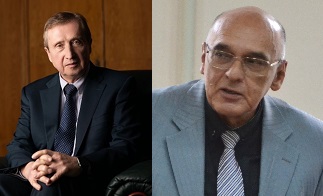
Пульс українського суспільства: соціальна напруженість у добу війни
DOI:
https://doi.org/10.15407/visn2025.11.049Ключові слова:
соціальна напруженість; гуманітарна безпека; OSINT; великі мовні моделі; баєсівське моделювання; форсайтний сценарний аналіз; штучний інтелект; соціальна резильєнтність України.Анотація
У статті наведено результати міждисциплінарного дослідження динаміки соціальної напруженості в Україні у 2000—2025 рр. із використанням інтегрованої моделі, що поєднує психологічну теорію соціальної напруженості з інструментами штучного інтелекту, OSINT-аналітики та форсайтного сценарного аналізу. Соціальну напруженість розглянуто як інтегральний індикатор суспільної рівноваги, який відображає колективний психоемоційний стан суспільства в умовах війни, економічної нестабільності та соціальної фрустрації. За даними понад 2 млн цифрових повідомлень побудовано карту емоцій українського суспільства, визначено 9 ключових кризових фаз на часовому відрізку 2004—2025 рр. і проаналізовано циклічну природу соціальної напруженості з середнім піковим значенням CH = 5,7±1,25 та періодичністю кризових коливань 4—5 років. На основі інтеграції кількісних оцінок і форсайтного підходу розроблено сценарії розвитку суспільної ситуації на 2026—2027 рр. Показано, що за високого рівня соціальної напруженості згуртованість суспільства поєднується з ризиками виснаження, втрати довіри та соціальної поляризації. Запропонована методологія може бути покладена в основу національної системи стратегічного моніторингу гуманітарної безпеки, здатної здійснювати раннє виявлення кризових явищ, підтримувати аналітичне управління соціальними процесами та сприяти формуванню політики стабілізації й соціальної резильєнтності України в умовах війни та післявоєнного відновлення.
Як цитувати:
Згуровський М.З., Слюсаревський М.М. Пульс українського суспільства: соціальна напруженість у добу війни. Вісник НАН України. 2025. № 11. С. 49—63. https://doi.org/10.15407/visn2025.11.049
Посилання
Slyusarevskyy M.M. Social tension: A theoretical model of necessary and sufficient indicators. Scientific Studios on Social and Political Psychology. 2002. (5): 24—34 [in Ukrainian].
Kredentser O.V., Lagodzinska V.I., Kovalchuk O.S. The theoretical analysis of the concept of "social tension": an interdisciplinary approach. Actual Problems of Psychology. 2016. 1(45): 48—55 [in Ukrainian].
Slyusarevskyy M.M. Diagnosis, forecasting, and adjustment of social tension: A conceptual model. Scientific Studios on Social and Political Psychology. 2007. (18): 49—69 [in Ukrainian].
Grattafiori A. et al. The Llama 3 herd of models. ArXiv. 2024. https://doi.org/10.48550/arXiv.2407.21783
Zgurovsky M., Sineglazov V., Chumachenko E. Artificial intelligence systems based on hybrid neural networks: theory and applications. Springer Nature, 2021. https://doi.org/10.1007/978-3-030-48453-8
Zgurovsky M.Z., Zaychenko Y.P. Big data: Conceptual analysis and applications. Springer, 2019. https://doi.org/10.1007/978-3-030-14298-8
Roponen J., Salo A. A probabilistic cross-impact methodology for explorative scenario analysis. Futures & Foresight Science. 2023. https://doi.org/10.1002/ffo2.165
Zgurovsky M.Z. Foresight: Scenarios of the Russia–Ukraine war in the context of a new Euro-Atlantic security architecture. Kyiv, 2024 [in Ukrainian].
Zgurovsky M.Z. Foresight of the development of Ukraine’s defense industry for 2021—2030. Kyiv, 2021 [in Ukrainian].
Bishop C.M. Pattern recognition and machine learning. Springer, 2006.
Murphy K.P. Probabilistic machine learning: An introduction. MIT Press, 2022.
Gelman A., Carlin J.B., Stern H.S., Dunson D.B., Vehtari A., Rubin D.B. Bayesian data analysis. 3rd ed. Chapman & Hall/CRC, 2013. https://doi.org/10.1201/b16018
Jaynes E.T. Probability theory: The logic of science. Cambridge University Press, 2003.
Vorona V.M., Shulga M.O. (eds) Ukrainian Society: Monitoring Social Changes. Vol. 8. Kyiv: Institute of Sociology of NAS of Ukraine, 2021 [in Ukrainian].
Slyusarevskyy M.M., Chunikhina S., Flaherty M. Social tension as a macro indicator of the psychological well-being of society. Wiadomości Lekarskie. 2021. 74(11): 2812—2817. https://doi.org/10.36740/WLek202111123
Assessment of the situation in the country, trust in social institutions, politicians, officials and public figures, attitude to elections during the war, belief in victory (February-March 2025). Razumkov Centre. March 26, 2025.
Ukraine: From War to Peace and Recovery. Analytical Assessments. Razumkov Centre. February 2025.
Golovakha Ye., Makeiev S. (eds). Ukrainian society in wartime. Year 2023. Kyiv: Institute of Sociology of the NAS of Ukraine, 2023 [in Ukrainian].
Simonchuk O. Social structure of Ukrainian society under the influence of Russia’s aggression. Sociology: Theory, Methods, Marketing. 2024. (1): 26—62. https://doi.org/10.15407/sociology2024.01.026
Morgan M.G., Henrion M. Uncertainty: A guide to dealing with uncertainty in quantitative risk and policy analysis. Cambridge University Press, 1990. https://doi.org/10.1017/CBO9780511840609
Scheffer M., Bascompte J., Brock W.A., Brovkin V., Carpenter S., Dakos V., Held H., van Nes E.H., Rietkerk M., Sugihara G. Early-warning signals for critical transitions. Nature. 2009. 461(7260): 53—59. https://doi.org/10.1038/nature08227
Ramakrishnan N., Butler P., Muthiah S. et al. “Beating the news” with EMBERS: Forecasting civil unrest using open source indicators. In: Proc. 20th ACM SIGKDD Int. Conf. on Knowledge Discovery and Data Mining, 2014. P. 1799—1808. https://doi.org/10.1145/2623330.2623373